

Zellige 是一款软件工具,允许从 3D 模型中自动提取非规定数量的各种表面 通过荧光显微镜获得的图像。该程序可通过斐济插件使用。
出版
教程
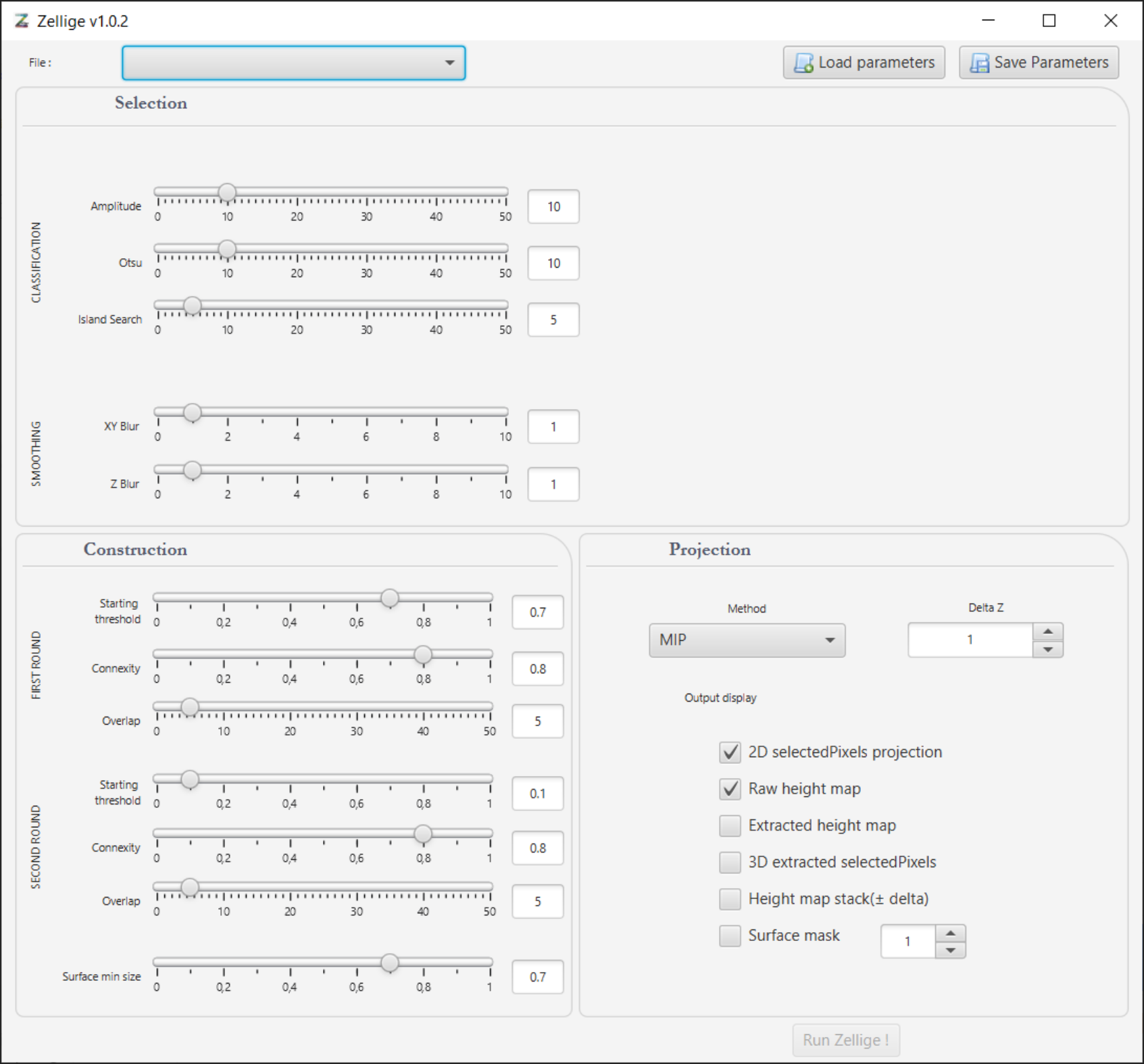
Zellige 插件由一个窗口组成,每个步骤分为 3 个主要部分:选择、构建和投影。
As an example we use an acquisition of Drosophila pupal wing and abdomen. Open the file in Fiji.
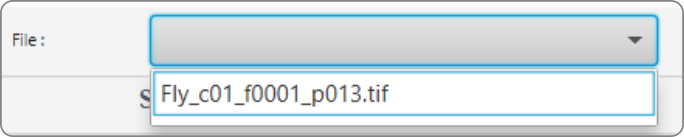
- 选择一个文件 左上角是一个选择字段,当单击斐济所有打开的图像时将显示该选择字段。然后您可以选择要处理的图像。
- 加载/保存参数 用于提取表面的参数集可以在[here](http//link/to/file)中找到。将文件下载到您的计算机上,然后单击“加载参数”按钮将文件加载到 Zellige 中。
- 选型参数 除了振幅和 Otsu 参数之外,岛屿搜索参数还允许消除一些背景或非特定像素。这 3 个参数设置分类部分。分类后,在 xy 平面和 z 轴上执行平滑步骤,并由参数 XY 模糊和 Z 模糊设置。
- 振幅
The amplitude parameter set the value for a thresholding based on the saliency of a local intensity maximum detected along the z-axis. Pixels which are local maxima along the z axis and which present a saliency above the amplitude parameter value are kept.
- 大津
The ‘Otsu’ parameter set the value for a thresholding based on local pixel intensity. Pixels that are both locally brightest and with an intensity above the Otsu parameter value are kept.
- 岛屿搜索
The Island Search parameter set the size for which small isolated clusters or ‘islands’ contained in the classified image should be removed. This parameter is mostly useful when the input image contains a spurious signal due to vesicles for example.
- XY 和 Z 模糊
XY模糊和Z模糊参数分别设置xy平面和z轴的高斯滤波器的半径。然后对分类后的图像进行这些过滤器的处理。此步骤对每个维度上的每个表面进行平滑,并且部分填充表面孔。这种平滑可以允许程序处理各种网格尺寸和各种拓扑的上皮。 - 施工参数
- 初始阈值
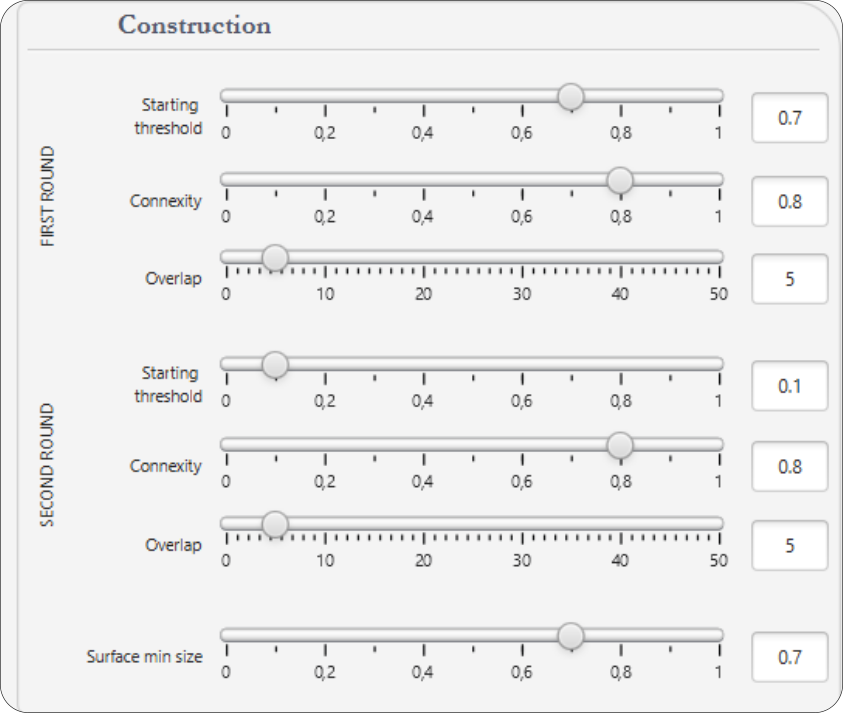
The construction blocks can have various lengths depending on the size of the surfaces. Despite the previous classification, some unwanted signal can subsist. Those blocks belonging to the background are small compared with those belonging to a surface; the biggest construction blocks are those that we want to use . The starting threshold is a cut-off that determines, according to the length distribution of the construction blocks, which fraction of the biggest construction blocks can be used as seeds to start a surface construction. The goal of the starting threshold is to prevent the construction of small or false surface (background signal or unwanted signal), the idea is to set this parameter as low as possible. - 重叠
The ‘Overlap’ parameter corresponds to the minimum number of overlapping pixels necessary to test a match between two construction blocks. This parameter should be set as high as possible to prevent any mismatch. - 适应性
The 'connexity' corresponds to the minimum value of the number of connected pixels over the number of overlapping pixels to assemble 2 blocks. This parameter should be set as high enough as possible to prevent any mismatch. - 表面最小尺寸
表面最小尺寸相对于 XY 输入图像尺寸的最小尺寸,提取的表面必须被视为有效。该参数对于两轮都是相同的。
在我们的例子中,其中一个表面仅占图像总尺寸的10%左右,表面最小尺寸参数应设置为0.1。该参数应设置得相应高,以防止构建小表面(小表面不需要的结构或在背景中构建的表面)
- 投影参数
- 原始高度图(构建步骤的输出),
- 投影,
- 高度图投影(在指定间隔中使用哪个z值来生成投影),
- 图像子体积(指定间隔2deltaZ + 1上的3D图像),
- 提取的3D表面,
- 3D表面模拟器,您可以在其中指定一个间隔,然后将其应用为原始图像输入上的ROI。
- 运行泽利格 After all parameters are set, click on the 'run Zellige' button.
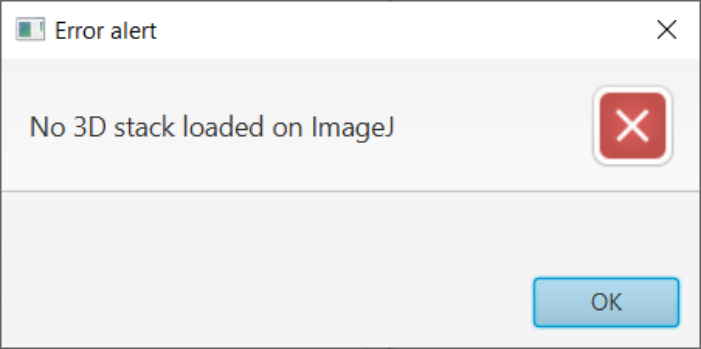
Zellige 将 1 通道 3D 图像作为输入,否则屏幕上会出现弹出错误消息:
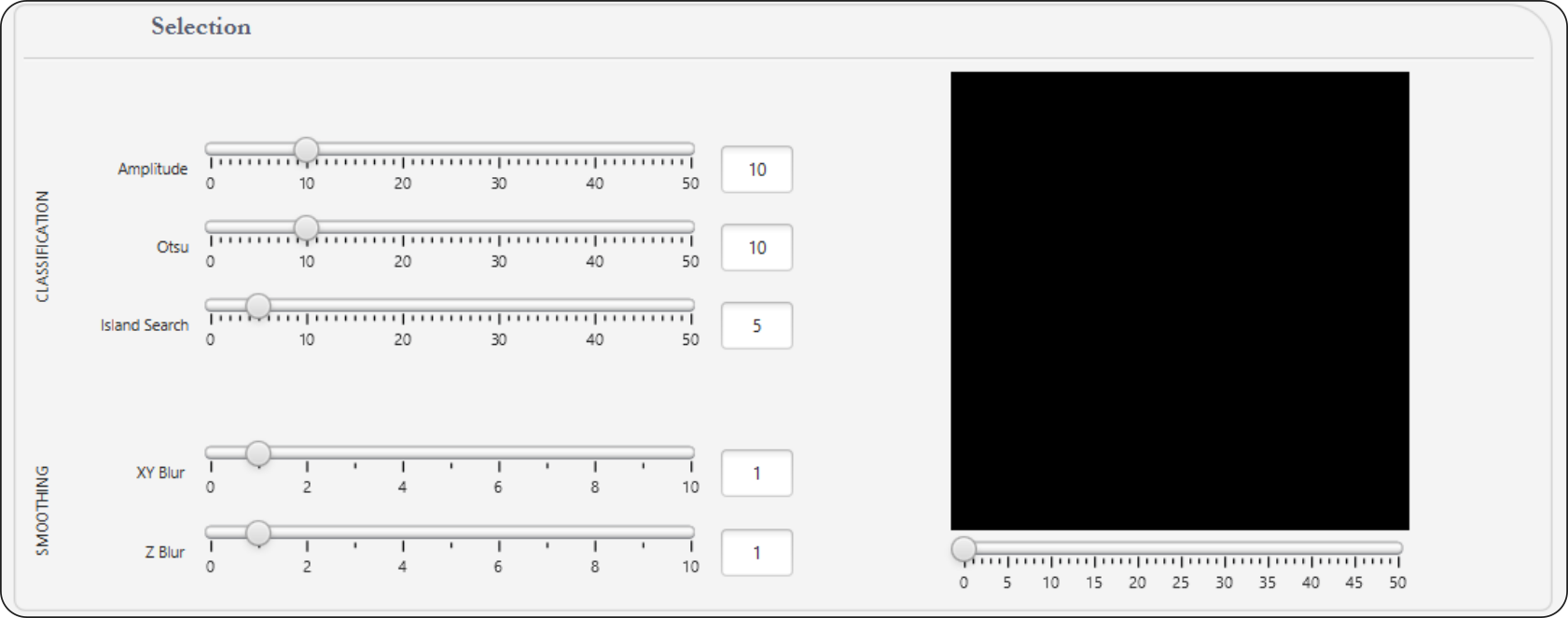
选择合适的文件后,像素选择的步骤开始:图像制作(高斯元件:2 x 2 x 1)以及允许选择像素的两个分类的计算。这些分类可以在“选择”面板中进行配置:
Zellige的功效主要是这种双重分类:准确识别哪个像素属于表面,哪个像素背景属于背景,可以更快更好地重建表面。因此,双重分类的输出显示在选择面板的右侧部分,并允许您查看哪些像素将用于算法的其余部分。分类显示底部的滚动条允许您沿着z轴滚动条分类。此时计算过程中,双参数(梯度和Otsu)被禁用,如“运行”按钮。
As soon as one of the two parameters is changed, the new output of the double classification is automatically computed and displayed. This implies that for a large image both scroll bars will be disable every time you change the value of the ‘Amplitude’ or ‘Otsu parameter’, and so for a time corresponding to the computation of the thresholding.
When the output of both classifications is display, you can directly click on the ‘run’ button or first, load a parameter file or adjust the different parameters manually.
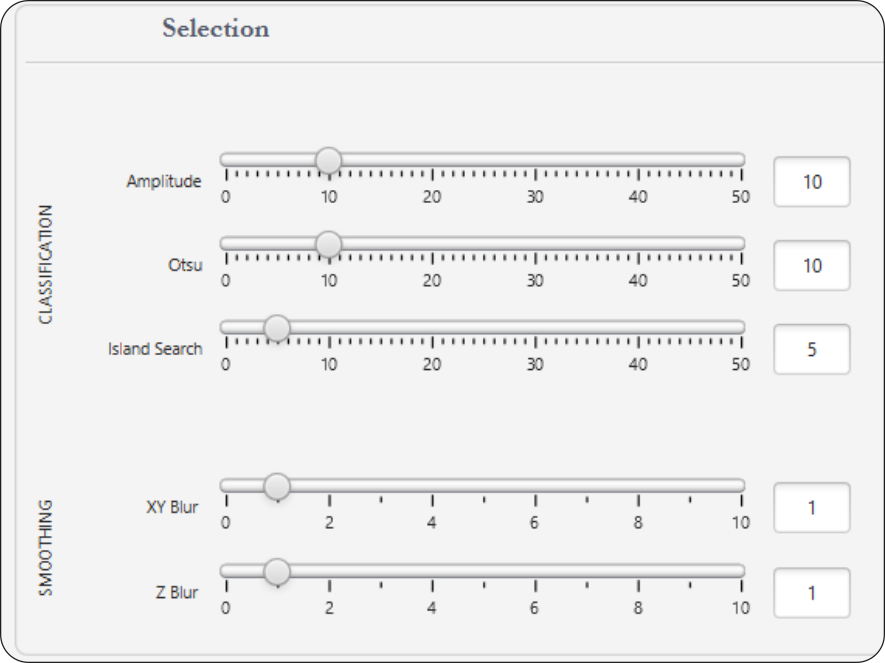 您可以随时单击“保存参数”按钮来保存GUI上设置的参数。
In our example, the abdominal cuticle (S3) presents a very low signal compared with the other surfaces. Therefore the double classification parameters should be set to display this low intensity signal surface. The input does not present any spurious signal : the value of Island search parameter will not impact the selection.
In our example, we have a surface with large cells (S2) so the XY blur needs to be high enough, two surfaces relatively close from each other (S1 and S2) and a surface with a very steep edge. The Z blur value has to be >0使边缘平滑,但不要太高亮度合并S1和S2。
The surface construction consists of two rounds. For each round selected pixels are grouped under an orthogonal axis to form construction blocks. Then each surface is assembled with those blocks. For the first round the pixels are those selected in the selection step. For the second round the pixels correspond to each surface constructed in the first round. Both rounds are set according to 4 parameters, namely starting threshold, connexity, overlap et surface min size. The first three are specific for each round, the latter is the same for both rounds.
此示例包含四个表面,其中一个表面比其他表面小。因此,为了提取包括小表面在内的所有块,初始阈值需要足够高以包含属于特定小表面的一些构造块。
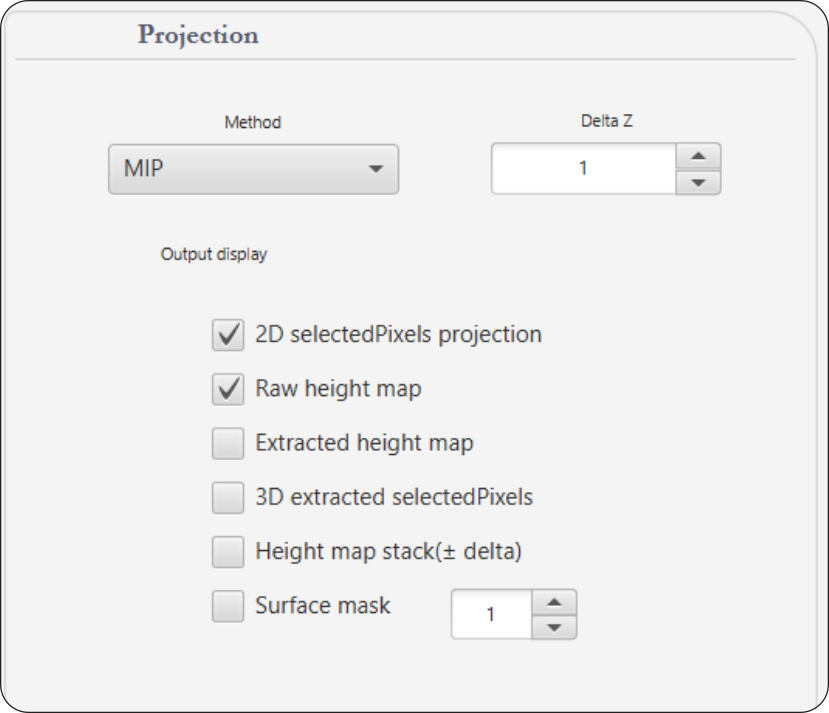
The output of the construction step is a list of height maps. The projection panel allows you to choose how you want to use those height maps to project the surfaces. You can choose the method with which you want to generate the projection via the selection field ‘Method’: only the MIP method is available for now, we will implements other methods in the near future. You can also choose the interval on which to apply the method with the parameter delta Z. The interval equals to (2 deltaZ + 1). You can display several outputs:
The state of the program is displayed on the bottom of the application next to the 'run zellige' button.
使用提供的参数集,Zellige 将生成 6 个表面,其中包括 4 个感兴趣的表面。 </ul>